Our Mission
Every family deserves more time together.
We built NephroSense AI® to help clinicians surface kidney risk earlier, so people can live longer, fuller lives with the ones they love.
Meet the people behind NephroSense AI ↓Where this started
The patients a threshold rule cannot see
The patients who most need finding are the ones an alert never fires on: their creatinine reads normal, and the urine albumin test that would complete the picture was never ordered, so there is nothing in the record to fire on. Finding them means reading the routine panel that was already drawn — values already paid for, already sitting in the chart.
The question already answered
Existing risk equations answer: given a patient already known to have kidney disease, how fast will it progress?
The question we work on
We begin upstream: in a patient nobody has flagged, whose creatinine reads normal and who never had a urine test, should this person be prioritized for confirmatory kidney evaluation at all?
- Worldwide
- 850M+
- people affected by kidney disease worldwide
- Locally
- 37M
- US adults with CKD
Kidney disease is projected to become the 5th leading cause of death by 2050.
The problem isn't data. It's translation.
NephroSense AI was built to solve that problem: to give community health workers, primary care physicians, and health systems the tools to identify CKD risk early from a routine adult lab workup.
SourcesWhat Your Kidneys Do
When your kidneys go quiet, the damage doesn't
In the summer of 2015, Beirut's garbage trucks stopped. Within weeks, waste swallowed the streets, the smell was unbearable, and a furious city poured into the squares in protest. When the crew that hauls away your trash walks off the job, you find out fast.
Your kidneys are that crew. Every single day, they quietly filter around 180 liters of blood, clearing out the metabolic waste your body never stops making. You never notice the work, because they never stop showing up to do it.
But when your kidneys go on strike, nothing piles up on the street. The waste builds silently, inside you, with nothing to see and nothing to smell. By the time anything feels wrong, most of the damage is already done, and the only way left to take out the trash is dialysis: a machine doing what your kidneys once did for free, every day, for the rest of your life.
of US adults with CKD don't know they have it — the disease advances silently (CDC).
Beirut's crisis was impossible to ignore. Kidney disease is the opposite, and that's exactly what makes it so dangerous.
Health equity at the core
CKD disproportionately impacts underserved communities, especially those with the least access to nephrology specialists. NephroSense AI is designed for Federally Qualified Health Centers (FQHCs) and community clinics, where primary care providers can prioritize adult patients for follow-up using a routine adult lab workup and vitals. No new tests. No new hardware. A workflow that supports timely kidney follow-up where it matters most.
“I gave my father one of my kidneys. A tool like NephroSense AI is something I would have valued when he needed it. Kudos to this great work — I harbor no doubt this technology will have immense global impact.”
Leadership
Team

Dr. Poornima Dubey, PhD
Co-Founder, Chief Executive Officer
Researcher trained at MIT, Harvard Medical School, and IIT, with a background spanning AI/ML, nanobiotechnology, and health technology. As Chief Executive Officer, Poornima leads NephroSense AI and its scientific direction, bridging computational methods with clinical kidney-disease research.
LinkedIn: Dr. Poornima Dubey, PhD →
Dew Prabhakar, MBA
Co-Founder, Chief Marketing Officer
Recent IIM graduate. Dew leads NephroSense AI's go-to-market strategy and global operations, focused on bringing CKD screening to the communities where it is needed most.
LinkedIn: Dew Prabhakar, MBA →
Dr. Nisha Dubey, MBBS
Co-Founder, Chief Clinical Officer
Physician trained at King George's Medical University. Dr. Nisha Dubey provides clinical oversight for NephroSense AI, ensuring the platform reflects real-world care and sound medical judgment.
LinkedIn: Dr. Nisha Dubey, MBBS →Advisory Board
Advisors

Strategic Advisor — Commercial Scaling & Digital Health
Partner at 1955 Capital, with three decades as an operator and investor across medical devices and digital health, including CEO of Accuray and of AliveCor. Advises on commercial scaling, EHR integration, and data strategy.

Strategic Advisor — Implementation Science & Evidence-to-Impact
Founder of People's Evidence Lab and a physician (MD, MRCP) with 25+ years in pharmaceutical evidence generation and regulatory science at Pfizer. Advises on implementation science, measurement design, and fairness across patient subgroups.

Regulatory Advisor
Pharmaceutical scientist and Senior Lecturer at the University of Greenwich (UCL PhD), with over a decade advising industry on pharmacovigilance and medical quality assurance. Guides the regulatory pathway.

Strategic Advisor — GTM & Enterprise Sales
Founder of KLN Advisory, with 25+ years in enterprise technology sales, including global sales leadership at Oracle Financial Services. Advises on enterprise go-to-market with health systems.
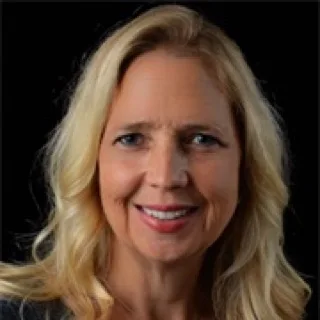
Strategic Advisor — Health Informatics & Interoperability
Professor of Learning Health Sciences at the University of Michigan Medical School and a Fellow of the American College of Medical Informatics, whose research is on the quality and usability of EHR data for research. Advises on HL7 FHIR and health-data standards, data quality, and the evidence-generation roadmap.

Lead Legal Advisor
Founding member of Frank & Delaney Immigration Law, LLC (JD, University of Baltimore), specializing in employment-based immigration and global talent mobility. Oversees immigration strategy and reviews the company's general agreements and contracts.
Evidence-Based
Clinical foundation
- 1
KDIGO 2024 Clinical Practice Guideline for the Evaluation and Management of CKD
- 2
CDC — Chronic Kidney Disease data & research (prevalence and awareness)
- 3
USRDS Annual Data Report — CKD and ESRD costs and populations
- 4
FDA guidance — Clinical Decision Support Software (21st Century Cures Act)
- 5
- 6
ISN Global Kidney Health Atlas (2023), International Society of Nephrology
- 7
ISN/WHO Kidney Health Resolution Implementation Guide (2050 projection)
- 8
Internal feasibility analysis on a US adult clinical cohort (internal; not a public source — manuscript in preparation)
Medical Disclaimer
NephroSense AI is a Clinical Decision Support tool for use by licensed healthcare professionals with physician oversight. It does not provide medical diagnoses and does not replace any laboratory or diagnostic tests. By integrating a patient's existing clinical data faster, it helps clinicians prioritize who needs confirmatory testing and follow-up sooner. All clinical decisions must be made by qualified healthcare providers based on a complete patient evaluation.